How to Identify Your Child’s Primary Learning Style

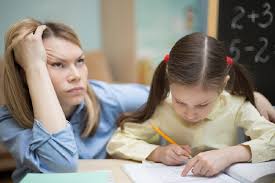
Hello everyone! This week I am going to focus on how you, as parents, can identify your child’s primary learning style. It is so important that you stay in close communication with your child’s teacher. Collaboration will be the key to your child’s ultimate success! The most common question that I have heard parents communicate to me throughout my years of experience consist of the following: How can I help my child study? My child just doesn’t get it, how can I help? What will help them understand? If you fall under this category of frustration, then I have good news for you. I am here to help and I promise that you are not alone in this!
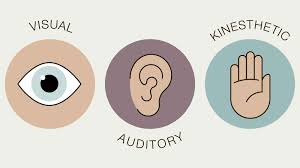
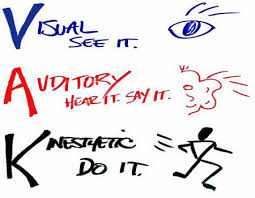
Parents and educators have, at least, identified three main types of learning: kinesthetic, visual, and auditory. Children often show a balance between the three, but usually one of these styles helps allow them to really be successful. You are probably wondering at this point what these learning styles are and how to figure out which one best suits your child. By figuring out which of these learning styles best fits your child, you will then be able to figure out the best way to help them study!
Kinesthetic learners are physical. If your child is great at sports than your child is probably is a kinesthetic learner. These learners usually have good balance, and they learn best by touching or doing things themselves. A kinesthetic learner uses a lot of hand gestures while learning. This may consist of counting on their fingers or clapping along while they are counting. Some indications your child is a kinesthetic learner might include being great at sports, dance, or physical activities, frequent use of gestures when speaking or explaining things, loves hands-on-activities, enjoyment of writing, and an early physical development of walking, crawling, or sitting early.
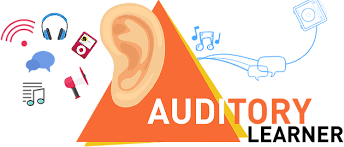
Auditory learners are drawn to sound. They will be drawn to music and show a strong interest in playing instruments or singing. When your child was younger, did they become alert to the sound of rain or conversations around them? If so, then your child is probably an auditory learner. Some indications your child is an auditory learner might include showing interest in music, instruments, or singing, creating their own songs, possess a strong verbal ability, ability to listen well and follow verbal directions, and/or perking up when they hear music or dialogue.
Visual learners are observant of the world around them and are drawn to art. If your child loves to look at paintings, linger over illustrations in books, and show interest in photographs, then your child is probably a visual learner. This may consist of enjoying screen time such as computers, television, or movies. They will be able to retain information from this screen time. Visual learners also have very vivid memories! Some indications your child is a visual learner might include having a vivid imagination, an interest in art, drawing, or crafts, a strong memory, a love for books, a good sense of direction, understanding of maps, and great recognition of people, faces, and places.
Determining which learning style that your child fits into will best help you assist them in studying and deciding which extra curricular activities that your child will be most successful in. Are you feeling a little overwhelmed by all of this information?! Still a little on the frustration side? Don’t worry, I have included the following link to a quiz that will help place your child under the correct learning style: https://www.scholastic.com/parents/family-life/parent-child/quiz-whats-your-childs-learning-style.html
I was able to talk to a student’s parent of mine, this week, that I have had the pleasure of working with in the past. I provided information to them, years back, on the different learning styles and how they could best help their child learn and be successful. In the information that I provided to them, was the link to the above quiz by Scholastic. When recently asked on how helpful the information on learning styles were to the success of their child, here is what they had to say:

The information that you provided, years back, was so helpful! I have been able to take the information and knowledge on the different learning styles and help my younger children as well! Before, I had never paid attention, or thought anything about, how their physical ability, interest in art, or alertness to the sounds around them could help assist me in helping them be successful! I often find myself saying, yep, my youngest one must be a kinesthetic learner, because he has a rocket football arm, that often somehow ends up knocking me in the face at times!

–Sarah H., a parent from Meadville R-IV School District

Just answer a few short questions and you will be well on the way to leading your child in the right direction! I hope that you enjoyed my post and found it to be very beneficial. Next week, I will be posting a blog on how to help students make the best use out of free digital materials!

Social media links:

https://sites.google.com/meadville.k12.mo.us/eagles/

Facebook page: Meadville R-IV School District

Contact information: Bkearns@meadville.k12.mo.us
How To Improve Collaboration and Communication in Education

Hello everyone! This week, I have shifted my focus from the importance of communication and collaboration in education to how we can effectively improve them within our district. Now that we all have an understanding of the importance of the duo, I think it is important for us to discuss how we can create improvement. I know, I know, you are probably thinking that we do not have enough time in our already given busy schedules, but hear me out. Teaching isn’t always easy, but we all know that it can be very rewarding!

Two-way communication between families and educators are necessary for student success. Research shows that the more parents and teachers share relevant information with each other about a student, the better equipped both will be to help that student achieve academically. There are many forms of two way communication that can be used. These opportunities for communication might include parent teacher conferences, weekly or monthly folders of student work sent home for parent review and comment, phone calls, email, or the use of digital tools or apps. I am personally using Class Dojo this year as a main form of parent communication. My students’ parents have found this app to be a quick and easy communication tool. I also use this tool to post pictures of those students whose parents have signed the consent form, doing activities within the classroom. We can actively improve communication and collaboration between educators and families throughout the use of any of these two way communication forms.

However, when using the use of digital tools or apps as a means for two way communication, it is important that you remember the following in an effort to protect your digital reputation. You should always remain professional. We are so often afraid or avoid communication with parents due to the fear of receiving a negative response. When receiving negative feedback, which we should know about very well as educators, it is always important that we remain positive and address the issue in a professional manner. We do not want to jeopardize our digital footprint. Once a statement has been put out, it may be too late to change it. Always self reflect before you self reveal. Involve administration and make sure they are also in on the conversation! Communication and collaboration are key to the success in our educational world.

Now that we have discussed forms of two way communication tools, it is also important to remember that effective communication strategies also involve initiation, timeliness, consistency and frequency, follow-through, and clarity and usefulness of communication. Communication and collaboration will only help lead to the success of our students if we use it correctly.

I hope that you enjoyed my blog for this week! Next week, I will be posting a blog on how to help parents identify their child’s primary learning style!

Social Media Links


Contact information: Bkearns@meadville.k12.mo.us
Facebook page: Meadville R-IV School District
https://sites.google.com/meadville.k12.mo.us/eagles/

Why Communication and Collaboration are Important in Education

About Me

If you are a teacher, administrator, or parent, than you are probably aware of the importance of communication and collaboration in education. Why? Well, you need both of these concepts in order to show awareness and to help our students become successful. I am Brittany Kearns, a fourth grade teacher at Meadville R-4 School District. I am currently nearing the end of my third year of teaching. I have gained a lot of experience throughout my bachelors and masters programs. I have then experienced the need for communication and collaboration first hand throughout my first three years of teaching in elementary. Communication and collaboration are interpersonal skills that are absolutely necessary in our educational society.

The purpose of my blog is to elaborate on the importance of communication and collaboration between teachers, staff, administration, and parents in an effort to help our students become successful. I am a firm believer in the fact that education is truly a team effort and takes the collaboration of all involved to take students to their highest potential. Educators need support from all involved in an effort to best reach the needs of each student. Students need to see that we all truly care about them and see the potential in each and every individual.

For all my fellow educators, how many of you go to work each day and draw support from your co-workers? I know that I do. In fact, I am not sure I could manage without them. I often refer back to the old famous saying, “Beg, borrow, and steal.” With only being in my third year of teaching this has been a huge aspect of my success. I am a firm believer that you can learn from each other through collaboration and communication.

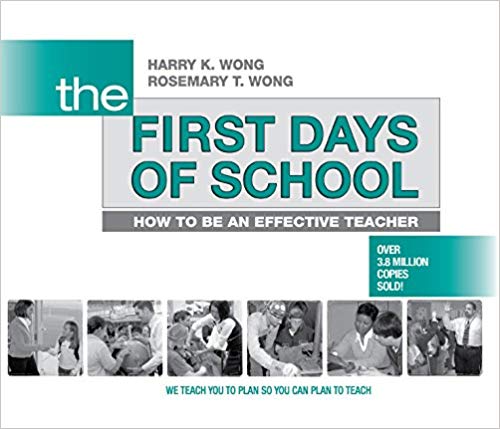
In my first year of teaching, I was new to the idea of teaching fourth grade. I completed my student teaching in Kindergarten and was very anxious to step out of my comfort zone. Now, I absolutely love teaching fourth grade. Looking back on my first year, I remember thinking: “these poor kids.” If it wasn’t for a few of my life-saving co-workers, I truly don’t know how I would have survived. They taught me everything that I needed to know. They shared helpful tips and strategies with me to help me be successful. One of my co-workers gave me the book, First Days of School: How to Be an Effective Teacher by Harry K. Wong and Rosemary T. Wong. You want to talk about a life saver?! They also provided resources for me and gave me many valuable explanations on topics I was not familiar with. I was also able to observe a few of these upper elementary teachers. I was able to learn so much. I still work very closely with my upper elementary collaboration team. We share ideas, lesson plans, go over collected data, and create rubrics. We have great co-worker relationships and understand that our ultimate goal is to help our students succeed.

I have several ideas for blogging in the near future! Some of the future blogging topics that I would like to focus on would include how to help kids make use of free digital materials, how to help parents identify their child’s primary learning style, and the understanding of the brain of a teenager and how to help them cope. These are all topics that I am very passionate about and can’t wait to blog about them in the near future.

Next week, I will be posting a blog on how communication and collaboration can be improved in education!

Social Media Links

https://sites.google.com/meadville.k12.mo.us/eagles/

Facebook page: Meadville R-IV School District

Contact information: Bkearns@meadville.k12.mo.us